
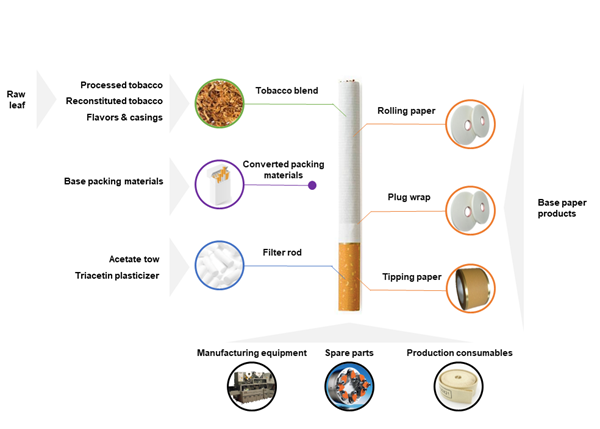
The journey from a green tobacco field to a sealed pack on a store shelf involves complex engineering, agricultural science, and precision manufacturing. Understanding how cigarettes are made reveals why modern production is both efficient and strictly regulated.
In this guide, we’ll break down every stage of tobacco processing and cigarette manufacturing, using industry terminology to help you rank for related power keywords.
Step 1: Tobacco Cultivation & Harvesting – The Raw Material
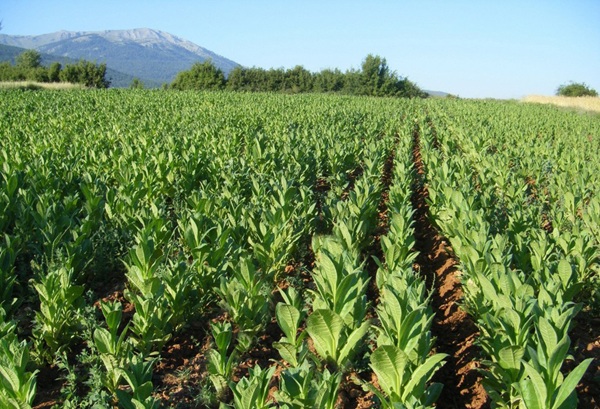
Before any cigarette takes shape, the process begins with Nicotiana tabacum plants grown primarily in China, Brazil, India, and the United States.
-
Seeding & Growing: Tobacco seeds are sown in greenhouses, then transplanted to fields.
-
Topping & Suckering: Farmers remove the flower head to force energy into larger leaves.
-
Harvesting: Leaves are picked by hand or machine, either by “priming” (selecting ripe leaves) or stalk cutting.
Step 2: Curing – Developing Aroma & Color
Freshly harvested leaves are green and high in moisture. Curing transforms them chemically and physically.
| Curing Method | Duration | Typical Tobacco Type | Result |
|---|---|---|---|
| Flue-curing | 5-7 days | Virginia | Golden, sweet, high sugar |
| Air-curing | 4-8 weeks | Burley | Brown, low sugar, nutty |
| Sun-curing | 2-3 weeks | Oriental | Small leaves, aromatic |
| Fire-curing | 3-10 weeks | Dark-fired | Smoky, robust, high nicotine |
Once cured, tobacco is baled and aged for 1-3 years to mellow harsh compounds.
Step 3: Blending – The Secret Recipe
Most commercial cigarettes use a blend of tobaccos to balance burn rate, nicotine delivery, and taste. Common blends include:
-
American Blend: Virginia (sweet), Burley (body), Oriental (aroma).
-
Virginia Blend: 100% flue-cured Virginia.
-
Dark Blend: Fire-cured for strong, smoky profiles.
Manufacturers also apply casings (sugars, licorice, cocoa) and top dressings (flavor additives) during blending.
Step 4: Cutting & Conditioning – Preparing the Strip
After blending, pressed tobacco blocks (called “loaves”) are:
-
Shredded into fine ribbons (0.8-1.2 mm width) using rotary cutters.
-
Conditioned with steam to reach optimal moisture (12.5-13.5% for cigarettes).
-
Expanded using dry ice expanded tobacco (DIET) to increase volume and reduce weight.
Step 5: Cigarette Making – High-Speed Rod Formation
This is the core of how cigarettes are made. Modern makers (e.g., Hauni Protos) operate at 8,000–20,000 cigarettes per minute.
-
Rod Maker: Cut tobacco is fed onto a continuous paper web, shaped into a rod, glued, and sliced into dual-length cigarettes.
-
Filter Attachment: A separate unit attaches cellulose acetate filters using porous tipping paper.
-
Ventilation: Many brands laser-drill tiny holes in the tipping paper to dilute smoke with air.
Step 6: Quality Control – Every Cigarette Checked
Automated systems reject defective cigarettes based on:
-
Weight/density (using gamma or microwave sensors)
-
Hardness (pressure test)
-
Air permeability
-
Filter integrity
Step 7: Packaging – From Loose to Sealed Pack
The final visible stage in how cigarettes are made is high-speed packaging.
-
Collating: 20 cigarettes are grouped into a “bundle.”
-
Inner Wrap: Foil or paper-backed foil seals in freshness.
-
Carton Making: The bundle enters a hinge-lid pack (soft or hard).
-
Outer Wrap: Transparent polypropylene film with tear tape.
-
Case Packing: 50 packs (1,000 cigarettes) go into a master case.
Packaging machines like GD X6 or Focke 750 produce up to 600 packs per minute.
Step 8: Distribution & Storage – Final Journey
Finished cases are palletized, wrapped, and stored in climate-controlled warehouses (18-22°C, 55-65% humidity) to prevent mold or drying. From there, trucks deliver to wholesalers and retailers.
Environmental & Regulatory Notes
Modern factories recycle tobacco dust into reconstituted sheet, treat wastewater, and monitor emissions. Governments require health warnings covering 50-85% of pack surfaces in many countries.
For a deeper understanding of the industry’s economics and health debates, check out our comprehensive resource: Cigarettes Explained.
Conclusion – The End of the Line
Understanding how cigarettes are made: from leaf to pack highlights an astonishing marriage of agriculture and automation-from a fragile leaf to a standardized, globally traded consumer product. Whether you’re a student, retailer, or curious smoker, this manufacturing process remains a marvel of industrial efficiency.