
Not all cigarettes taste the same because not all tobacco is equal. The types of tobacco used in cigarettes determine everything from nicotine strength and burn rate to aroma and smoothness. Whether you are a smoker, a student, or an industry professional, understanding these tobacco varieties unlocks the secret behind every brand’s signature profile.
In this guide, we’ll break down the major kind of tobacco leaves used in cigarettes, how they are grown, and why manufacturers blend them in specific ways.
Why Tobacco Type Matters – Flavor, Burn & Chemistry
Before diving into individual leaves, it helps to know why growers and cigarette makers care so much about varietals. Each tobacco type offers a unique combination of:
-
Sugar content (affects sweetness and pH)
-
Nitrogen levels (influences strength and harshness)
-
Leaf thickness (controls burn speed)
-
Aromatic compounds (creates floral, smoky, or nutty notes)
By blending different leaves, manufacturers achieve a consistent, desirable smoking experience across millions of cigarettes.
The 4 Primary Types of Tobacco Used in Cigarettes
Most commercial cigarettes rely on a combination of four foundational tobaccos. Below is how they compare.
| Tobacco Type | Curing Method | Key Traits | Used In |
|---|---|---|---|
| Virginia (Flue-Cured) | Heated barns (flue-curing) | Sweet, bright, high sugar | Most global brands |
| Burley (Air-Cured) | Natural air (4–8 weeks) | Dry, nutty, low sugar, absorbs flavors | American blends |
| Oriental (Sun-Cured) | Sun-dried | Small leaves, aromatic, spicy | Premium & Turkish blends |
| Dark (Fire-Cured) | Smoldering fires | Smoky, robust, high nicotine | Cigars, some specialty cigarettes |
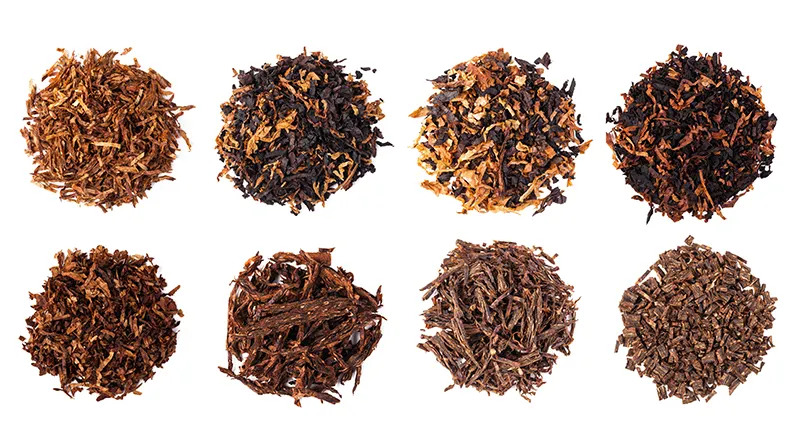
1. Virginia Tobacco – The Sweet Foundation
Virginia (or “Brightleaf”) is the most common kind of tobacco used in cigarettes worldwide. Grown mainly in the US, Brazil, and China, it is flue-cured in heated barns, which locks in natural sugars.
-
Flavor profile: Sweet, hay-like, slightly fruity
-
Nicotine: Medium
-
Role in a cigarette: Provides volume, even burn, and a smooth inhale
2. Burley Tobacco – The Neutral Absorber
Burley is air-cured in barns for up to two months. It contains very low sugar but higher nitrogen, making it strong and slightly harsh on its own. However, its porous nature absorbs added casings (sugars, cocoa, licorice) perfectly.
-
Flavor profile: Nutty, earthy, dry
-
Nicotine: Medium-high
-
Role in a cigarette: Adds body and carries flavor additives
3. Oriental Tobacco – The Aromatic Spice
Oriental varieties (including Basma, Samsun, and Izmir) are sun-cured. They have tiny leaves and a distinct, perfume-like aroma. They are seldom used alone but are essential in premium and “Turkish” blends.
-
Flavor profile: Spicy, floral, slightly sour
-
Nicotine: Low to medium
-
Role in a cigarette: Boosts complexity and aroma
4. Dark Tobacco – The Bold Punch
Fire-cured dark tobacco is hung over smoldering hardwoods (hickory, oak). It absorbs smoky phenols, resulting in a powerful, almost barbecue-like taste. It is more common in chewing tobacco, snuff, and some full-flavor cigarettes.
-
Flavor profile: Smoky, leathery, bold
-
Nicotine: High
-
Role in a cigarette: Adds strength and a lingering finish
How Blending Creates Iconic Cigarette Profiles
No single leaf makes a modern cigarette. Manufacturers create proprietary recipes using the types of tobacco used in cigarettes listed above. For example:
-
American Blend (Marlboro, Camel): Virginia + Burley + Oriental
-
Virginia Blend (Dunhill, Benson & Hedges): 100% flue-cured Virginia
-
Dark Blend (some European brands): Virginia + dark-fired Kentucky
Blending also involves cutting (ribbon vs. expanded) and reconstituted sheet (made from tobacco dust and stems) to reduce cost and control burn.
Specialty & Rare Tobacco Types
Beyond the big four, some niche types of tobacco appear in artisanal or regional cigarettes:
-
Perique – Grown only in St. James Parish, Louisiana; pressure-fermented for a peppery, fruity note. Used in tiny amounts as a spice.
-
Cavendish – Not a true variety but a sweetened, steamed preparation; rarely found in commercial cigarettes but common in pipe tobacco.
-
Shade-Grown – Grown under cheesecloth to produce thinner, more elastic leaves, used in some luxury cigarettes.
The Role of Additives & Reconstituted Tobacco
It is impossible to discuss modern types of tobacco used in cigarettes without mentioning that up to 30% of a cigarette’s fill can be “reconstituted” tobacco-paper-like sheets made from stems, dust, and scraps. Manufacturers add:
-
Humectants (glycerol, propylene glycol) to retain moisture
-
Sugars and cocoa to mask harshness
-
Menthol for cooling sensation
This is why a low-cost cigarette tastes different from a premium one, even when they use similar base leaf types.
How to Identify the Tobacco in Your Cigarette
Consumers rarely see the raw leaf, but you can guess the types of tobacco used in cigarettes by:
-
Checking the pack description: “American Blend,” “Virginia,” or “Turkish” are clues.
-
Tasting: Sweetness suggests Virginia; a dry, nutty finish points to Burley.
-
Smelling the unlit cigarette: Spicy notes indicate Oriental; smokiness means dark-fired.
For a complete, beginner-friendly overview of manufacturing and regulation, visit our detailed resource: Cigarettes Explained .
Conclusion – The Art of Leaf Selection
Understanding the types of tobacco used in cigarettes transforms a simple smoke into an appreciation of agricultural craft. From sun-dried Oriental leaves to fire-cured dark tobacco, each varietal plays a specific role in the final product. Next time you see a cigarette pack, you’ll know that behind the paper and filter lies a carefully balanced blend of leaves-each with its own story.